Creator commerce
Medicube, Skintific, Poppi, Rhode and an AI-cloned livestream duo treated creators as salespeople, not billboards. Prime treated them as hype. Here's the creator commerce playbook, and how to run it in Malaysia.
Skintific · Rhode · Poppi
Prime Hydration
On 15 June 2025, Chinese entrepreneur Luo Yonghao went live on Baidu's e-commerce platform. Except he didn't. Two AI avatars, his and his co-host's, ran the entire show for more than six hours: talking, joking, answering questions and selling.
According to Baidu, the stream sold 55 million yuan (about US$7.65 million). That beat Luo's earlier, shorter stream on the same platform. One industry executive told CNBC it was “a DeepSeek moment for China's entire livestreaming and digital human industry.”
Whether the seller is a person or an AI clone of one, the lesson is the same. The brands winning right now don't treat creators as a place to buy impressions. They treat creators as a sales force: paid on what they sell, measured on revenue, and in some cases given a stake in the company.
I run iPrima Media, the media and AI commerce arm of iPrima Group in Johor Bahru. This is the fourth piece in my series on unconventional growth. The earlier ones covered stunts versus flywheels, borrowed distribution and community-led growth. This one covers the engine that sits underneath most of them: creator commerce.
Why it matters now
Influencer marketing buys views. Creator commerce builds a sales team.
Old-style influencer marketing works like a billboard. You pay a creator a fee, they post, you count views and hope sales follow. Creator commerce works like a sales team:
- Creators sell, not just post. Affiliate links, TikTok Shop and Shopee listings, livestreams and discount codes tie every video to orders.
- Many small creators beat one big one. Believable voices with 10,000 to 250,000 followers often outsell a single celebrity post.
- AI multiplies output. AI helps match creators to products, cut video variations, write scripts and, as Luo showed, even host the stream.
- The metric is GMV, not followers. Sales per creator, cost per sale and repeat purchase rate decide who gets more budget.
Six cases show how far this goes, and one shows what happens when the hype runs ahead of the product.
The always-on salesperson
Luo Yonghao's AI avatars
Two AI clones kept a famous host's personality, and kept selling long after a human would tire.
Luo and his co-host built AI avatars of themselves on Baidu's generative AI model and let the clones run a full livestream on Baidu's Youxuan platform. The avatars kept the hosts' banter and answered viewers in real time.
- Douyin, China's biggest short-video platform, has restricted virtual humans, and livestreamed products tend to have high return rates (CNBC).
- AI hosts work best when they extend a real person's trusted persona, not when they replace trust altogether.
The AI didn't invent the trust. It scaled a host people already trusted. Build the persona first, then let AI keep it selling.
Turn your best human host's sessions into an always-on content library: clips, product demos and FAQ videos that sell between live sessions. Then test AI avatars for off-peak hours or repeat product explainers. Our AI video production team produces both, and our guide to video marketing trends covers where short-form and live are heading.
Ride the creator moment, then scale the shelf
Medicube (APR)
One viral creator video lit the fuse. Fast launches and full shelves turned it into a global business.
Medicube is the flagship brand of APR, a Korean beauty company that launches in small volumes and reacts quickly to TikTok and Instagram Reels trends. Its at-home skincare device, the AGE-R, found its breakout when a creator video went viral, and APR built its global expansion on that kind of social proof.
- 2025 net profit rose 170% to 290 billion won (about US$192 million), driven by overseas sales (Forbes).
- Medicube topped Amazon's 2025 Prime Day beauty top-10.
Creators create the spike. The brands that win are built to catch it.
Before you seed creators, make sure the shelf is ready. Shopee, Lazada and TikTok Shop listings should be optimised, stocked and priced before the first video goes out. We set this up end to end in our AI e-commerce work, and our guide to e-commerce platforms in Malaysia compares where to sell.
An affiliate army in Southeast Asia
Skintific
Hundreds of commissioned creators and daily livestreams did the job a distributor used to do.
Skintific entered Indonesia in August 2021 and opened on TikTok Shop that October. Instead of relying on one celebrity face, it built a large network of beauty influencers, affiliates and livestreamers who demonstrate products in real time and earn on every sale.
- A Universitas Indonesia case study credits TikTok social commerce for its success within 1.5 years, with TikTok sales averaging around IDR 100 billion a month in 2023.
- Affiliate share and Shopee ranking: Ecommerce Owner's Manual.
In Southeast Asia, the affiliate network is the sales team.
Build a KOC (key opinion consumer) bench: real customers and micro-creators who earn commission through TikTok Shop or Shopee affiliate links. Start with 20 to 30, track sales per creator weekly, and double down on the top performers. Our guides to KOC marketing in Malaysia and what KOC marketing is cover the setup, and our creator commerce team runs it.
Sign creators early, then give them a stake
Poppi
Backed creators at 90,000 followers. Now creators ask its founder for equity.
Poppi, a prebiotic soda brand founded in Houston, leaned on TikTok and creators long before it was a household name. It signed creators such as Alix Earle and Jake Shane when they had around 90,000 followers each. Earle later grew to millions.
- Background and deal: Wikipedia. In November 2026, co-founder Allison Ellsworth said creators now ask for advisory roles and equity “because they saw what happened at Poppi.”
- Poppi also settled a class action over its gut-health claims for US$8.9 million in 2025. Creator reach amplifies claims, so every claim needs to hold up.
Back creators before they're expensive, and align them with your success. The creator who grows with you becomes a partner, not a vendor.
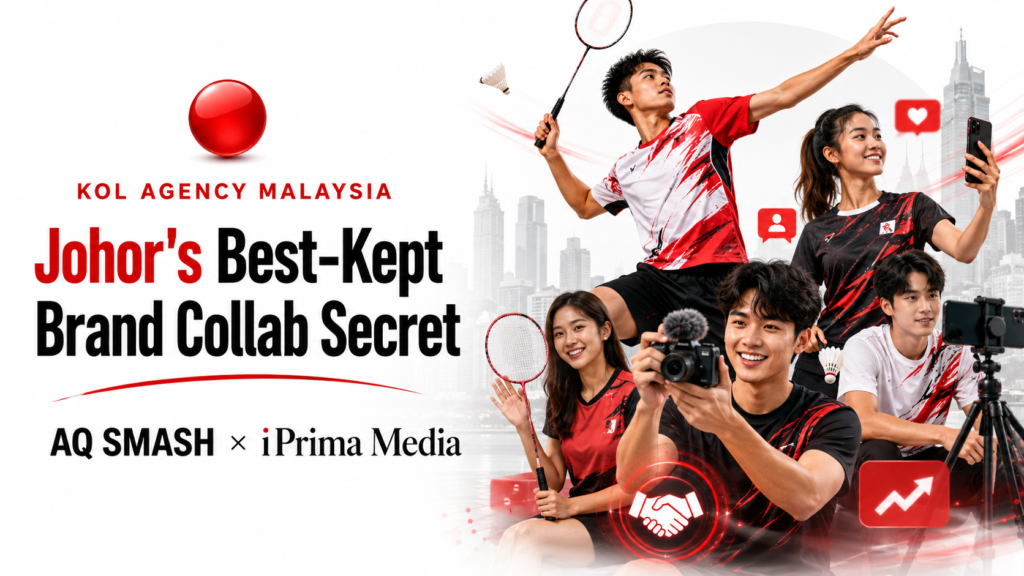
Look for rising creators in your niche with real engagement, not the biggest names. Offer long-term ambassador deals with sales commission, and for your best partners, consider revenue share or advisory roles. Our post on working with badminton talents as KOLs in Johor Bahru shows how we develop creators inside our own network.
The founder is the lead creator
Rhode
Ten products, sold direct, filmed by the founder. A billion-dollar exit in about three years.
Hailey Bieber co-founded Rhode in 2022 and runs it as its creative director, with her own channels as the main marketing engine. Rhode kept the range tight, sold direct to consumers, and made products people want to film, such as its viral phone case.
- After the deal, Rhode began rolling out to Sephora in the US, Canada and the UK (BeautyMatter).
When the founder is a credible creator, the brand gets distribution built in. A tight range keeps the content focused.
Most SME founders aren't celebrities, and they don't need to be. A founder who explains the product, shows the factory and answers customers on camera earns trust that ads can't buy. Keep the range tight and give every hero product a reason to be filmed. Our AI-assisted social media management team helps founders show up consistently without it eating their week.
Cautionary tale
Prime Hydration
Creator reach can sell the first bottle. Only the product sells the second.
Prime Hydration, launched by creators KSI and Logan Paul, was one of the fastest-selling drink launches of its era. Fans queued in supermarkets and resold bottles at huge markups. Then the novelty wore off.
- The board described a “transition from an initial hyper-growth phase to a more sustainable, long-term presence” (Marketing Week).
Repeat purchase is the metric that separates a creator brand from a creator fad.
Track repeat purchase rate from day one, not just launch-week GMV. Use WhatsApp follow-ups, loyalty offers and post-purchase content to bring buyers back. Our 24/7 WhatsApp automation handles the follow-up so the second sale doesn't depend on another viral video.
Close to home
What creator commerce looks like in Johor Bahru
Most agencies have to rent creators. We built our own network, so a brand working with us can access content, creators, a physical retail shelf, a community and events through one team.
Our creator and sports talent network of athletes, coaches, KOLs and KOCs who can test, film, sell and host. See working with badminton talents as KOLs.
AmpQuartz Badminton Club members, a ready audience for product seeding, club-night live sessions and honest reviews.
Flagship stores in Mount Austin, PRIND and Kumpoo, giving brands a physical shelf next to the content. See the psychology of impulsive buying.
A sports or lifestyle brand could seed products with our athletes and coaches, sell through affiliate links and in-store, host a live session at a club night, and capture every buyer into WhatsApp for the next drop.
The framework
The creator commerce engine
Drawn from the five cases that got it right. Sales data from each loop tells you which creators, hooks and products to scale next.
-
Seed
Put product in the hands of many small, credible creators before you pay big ones. Track who gets real engagement. (Poppi, Skintific)
-
Stock the shelf
Give every video somewhere to send buyers: optimised Shopee, Lazada and TikTok Shop listings, plus a fast landing page. (Medicube)
-
Go live
Run regular livestreams with human hosts, then test AI avatars for always-on selling. (Luo Yonghao, Skintific)
-
Partner with the winners
Give top-selling creators longer deals, commission upgrades, ambassador roles or a stake. (Poppi, Rhode)
-
Earn the second sale
Capture every buyer, follow up automatically and measure repeat purchase. Make your brand findable in search and AI answers between campaigns. (The Prime lesson)
Then loop. Weak content gets cut, winners get budget, and each cycle costs less than the last.
Measure what sells
The five numbers to track
- GMV per creator: how much each creator actually sells.
- Cost per sale: total creator cost (fees, commission, product) divided by orders.
- Winning-content rate: the share of videos that earn their cost back. Cut the rest fast.
- Return rate: livestream sales can come back. Watch net sales, not gross.
- Repeat purchase rate: the number that separates Rhode from Prime.
For measurement on the ad side, see our guide to using hold rate as a Meta Ads custom metric.
Work with iPrima Media
Smarter, louder, faster growth.
iPrima Media is the Media & AI Commerce Powerhouse of iPrima Group. We build the media, AI and commerce systems that turn attention into sales, combining creators, content, e-commerce, automation and our own retail and community network. Create fast, test cheap, kill weak content and scale winners.
- Luo Yonghao AI avatar livestream: CNBC via NBC Chicago, 19 Jun 2025
- APR / Medicube: Forbes, 13 Apr 2026 · KED Global, 27 Jul 2025
- Skintific: Atlantis Press / Universitas Indonesia, 31 Oct 2023 · Ecommerce Owner's Manual, 2 Aug 2026
- Poppi: Wikipedia · Net Influencer, 12 Nov 2026
- Rhode: BeautyMatter, 29 May 2025
- Prime: Marketing Week